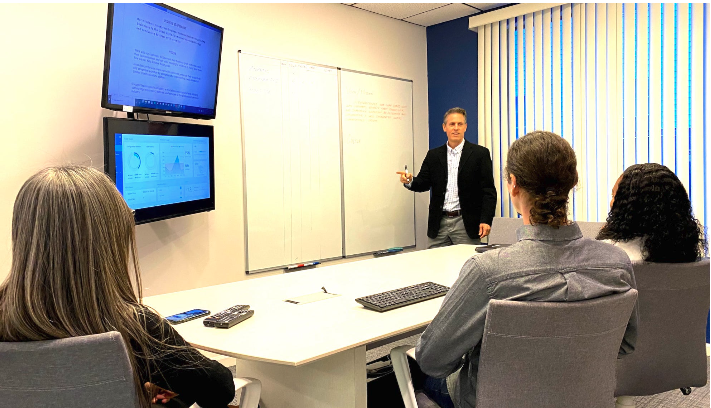
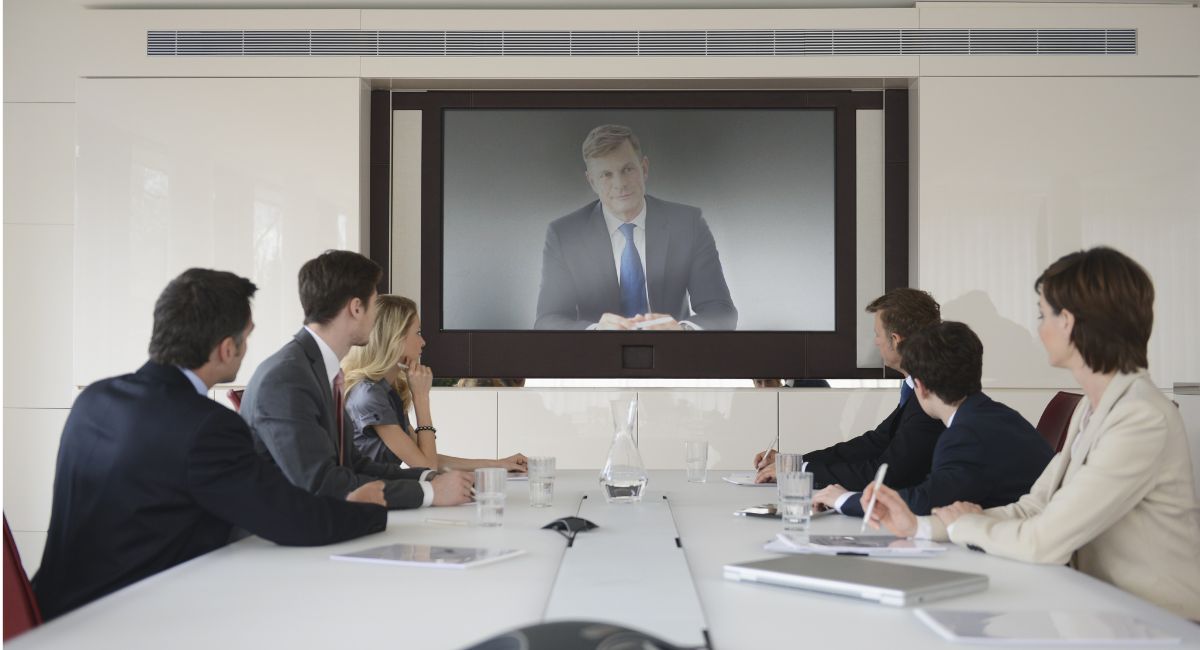
Most Connecticut businesses have some version of a conference room setup — a flat screen on the wall, a laptop balanced on the table, and a Zoom call that nobody can quite hear properly. It works, technically. But “technically works” and “actually professional” are two very different things, and the gap between them is costing businesses more than they realize.
Teleworks has been installing video conferencing systems for Connecticut businesses for over 28 years. Here’s what we see in conference rooms across Hartford County — and what it’s actually doing to the way your clients and partners perceive you.
The Conference Room Problem Most Businesses Don’t Notice
The tricky thing about a bad conference room setup is that you’re usually the last person to notice it. You’re in the room. Your remote participants are the ones staring at a ceiling-mounted camera angle, listening to audio that echoes off the walls, and watching your screen freeze every time someone opens a large file.
They notice. They don’t tell you.
In a competitive market like Connecticut — where law firms, medical practices, financial services companies, and professional services firms are constantly being evaluated by the clients they’re trying to win — the quality of your video conferencing setup sends a signal about how seriously you take your business. A laggy call with bad audio is the modern equivalent of a messy waiting room.
What “Good Enough” Actually Costs You
It’s easy to rationalize a subpar setup. The laptop works. The TV has an HDMI port. Everyone can see each other, more or less. But consider what’s actually happening during a typical meeting with a consumer-grade setup:
- Audio echoes or cuts out when multiple people speak at once
- The camera angle shows the ceiling or the tops of people’s heads
- Remote participants can’t see the whiteboard or presentation clearly
- Background noise from the office bleeds into the call
- Screen sharing lags or drops when the network gets congested
Each of these is a friction point that makes the people on the other end of that call work harder to stay engaged. In a sales meeting, a client presentation, or a board call, that friction translates directly into lost credibility.
What a Professional Video Conferencing Installation Actually Includes
A professional conference room setup is not just a better webcam. It’s a system — and every component has to work together for the result to be seamless.
A properly installed video conferencing system for a Connecticut business includes:
- A commercial-grade camera with auto-framing that keeps the room in view regardless of where people are sitting
- A dedicated speakerphone or ceiling microphone array that picks up voices clearly from anywhere in the room without echo
- A display sized correctly for the room — not too small to read from the back, not so large it distorts the image
- A clean cable management system, so no HDMI cables are running across the table or power strips on the floor.
- Integration with the platforms your team already uses — Zoom, Microsoft Teams, Google Meet — so joining a call is one tap, not a five-minute setup process.
- A reliable wired network connection dedicated to the conference room, so video quality doesn’t drop when the rest of the office gets busy
According to Cisco’s collaboration research, poor video and audio quality is one of the top reasons meeting participants disengage — and disengaged participants make worse decisions and remember less of what was discussed.¹ The technology in your conference room directly affects the outcome of the meetings you hold in it.
The Hybrid Work Reality for Connecticut Businesses
The shift to hybrid work has made conference room quality more important than ever. When half your team is in the office and half is remote, the conference room is no longer just a place to meet — it’s the primary interface between your in-person and remote employees.
A bad setup doesn’t just affect external meetings. It affects your internal team’s ability to collaborate, make decisions quickly, and feel equally included, regardless of where they’re working. Remote employees on a poor-quality call consistently report feeling left out of decisions and less connected to their teams.²
Connecticut businesses that invest in a proper hybrid meeting setup aren’t just buying better technology — they’re investing in their workforce’s culture and cohesion.
Common Mistakes We See in Connecticut Conference Rooms
After hundreds of installations across Hartford, West Hartford, Glastonbury, Farmington, and surrounding towns, the same mistakes keep coming up.
The wrong camera for the room size. A webcam designed for a single person at a desk does not belong in a 12-person boardroom. The field of view is too narrow, the resolution is too low, and anyone sitting at the far end of the table is essentially invisible to remote participants.
No dedicated audio solution. Laptop speakers and built-in microphones pick up every noise in the room — HVAC hum, keyboard clicks, side conversations — and compress it all into one muddy audio signal. A dedicated microphone array or speakerphone changes the experience entirely.
Relying on WiFi. Wireless connections introduce latency and inconsistency that wired connections don’t. A conference room running video calls over WiFi is always one busy morning away from a dropped call during the worst possible moment.
No standard way to start a meeting. When every meeting begins with someone fumbling with cables, switching inputs, or downloading an update, it signals to clients and partners that your team doesn’t do this professionally. A one-touch meeting system eliminates all of that.
A Real Example From Central Connecticut
A professional services firm in the Greater Hartford area came to us after repeated complaints from a key client about the quality of calls during their monthly review meetings. The firm had a large conference room with a premium TV and a relatively new laptop — on paper, a reasonable setup.
When we assessed the room, we found the laptop camera was aimed directly at the window behind the table, silhouetting everyone in the room. The laptop’s built-in microphone was picking up the HVAC system running overhead. And the connection was running over shared office WiFi, competing with 20 other devices during peak hours.
We installed a professional camera system with auto-framing, a ceiling microphone array, and a dedicated wired network drop for the conference room. The client called them within two weeks to specifically comment on how much better the calls had become. The technology hadn’t changed the content of their meetings — it had just stopped getting in the way of it.
Frequently Asked Questions
What video conferencing platforms do professional systems support?
A professionally installed system can be configured to work natively with Zoom, Microsoft Teams, Google Meet, Webex, and most other major platforms. The goal is a one-touch join experience regardless of which platform your clients or partners prefer.
How much does a professional conference room installation cost in Connecticut?
A single conference room installation typically ranges from $3,000 to $10,000, depending on room size, selected equipment, and installation complexity. Larger boardrooms or multi-room deployments will vary. A site assessment is the most accurate way to get a number for your specific space.
Can my existing TV be used in a professional setup?
In many cases, yes — depending on the display’s age and specs. What typically needs to be added is a proper camera, microphone system, and a dedicated computing device or conferencing appliance. Teleworks will assess your current situation and recommend the most cost-effective path forward.
How long does a conference room installation take?
Most single-room installations are completed in one day. We schedule around your business hours so the room is ready to use the following morning with zero disruption to your team.
Do you service conference rooms outside of Glastonbury?
Yes. Teleworks serves businesses throughout Connecticut, including Hartford, West Hartford, Farmington, Rocky Hill, Manchester, Newington, and surrounding communities.
Frequently Asked Questions
Your Conference Room Is a First Impression — Make It Count
Every meeting you host in that room is an opportunity to reinforce or undermine your professionalism. When the technology works seamlessly, clients and partners focus on what you’re saying. When it doesn’t, they’re focused on the friction — and that’s not where you want their attention.
Teleworks installs professional video conferencing systems for Connecticut businesses of all sizes — from single conference rooms to multi-room deployments across multiple locations. If your current setup is holding you back, we’d be happy to take a look.
👉 Contact Teleworks today to schedule a conference room assessment and find out what a professional setup would look like for your space.
Sources
- Cisco, Collaboration and the Future of Work Research — cisco.com
- Microsoft, Work Trend Index: Hybrid Work Research — microsoft.com/en-us/worklab
- Teleworks Communications, 28+ Years of Video Conferencing Installations Across Connecticut — teleworksct.com