
Most Connecticut business owners don’t think about their cabling until something breaks. By then, the real cost of cutting corners has already started to add up — in lost hours, dropped calls, and a reinstallation bill that’s almost always higher than doing it right the first time would have been.
Teleworks has been installing structured cabling for businesses across Connecticut for over 28 years. Here’s what we’ve learned from thousands of installations — and the mistakes we see businesses make over and over again.
What “Cheap Cabling” Actually Means
When businesses choose the lowest bid on a cabling job, they’re usually not just getting cheaper cable. They’re getting a fundamentally different approach to the installation.
Budget cabling jobs typically involve:
- Outdated cable grades like Cat5e that can’t support modern business demands
- No certified testing or documentation on individual runs
- Poor terminations, tight bends, and stapled cable that degrade the signal over time
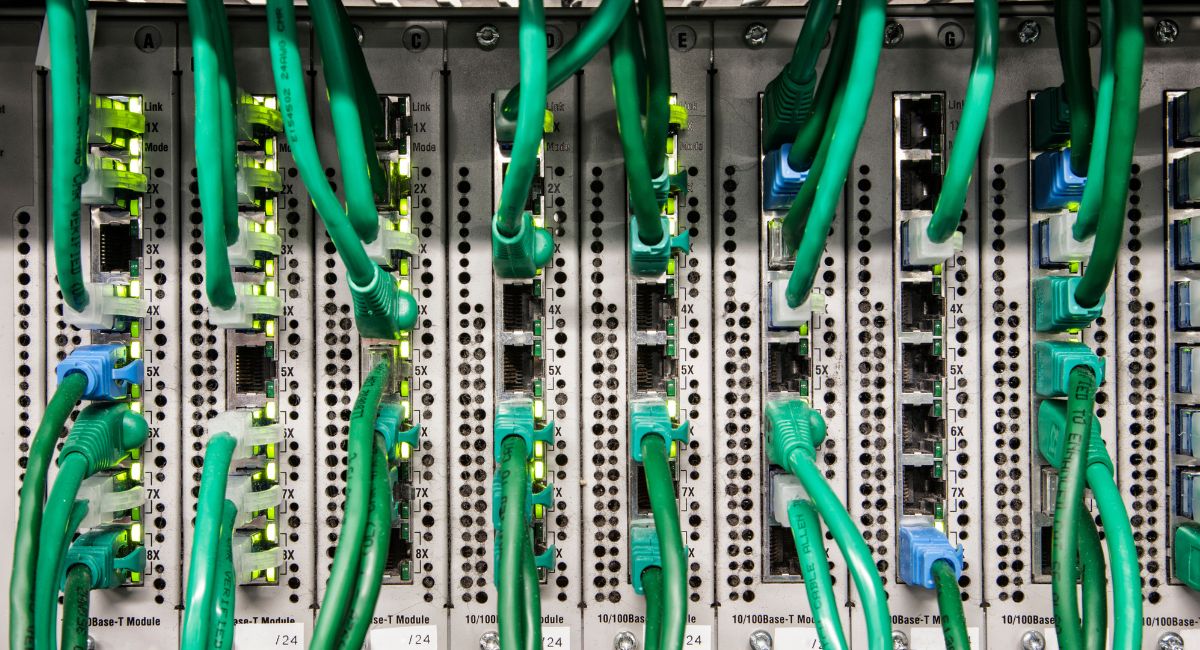
- No cable management, leaving the IT closet disorganized and difficult to troubleshoot
Each of these shortcuts might be invisible on day one. Over time, they compound — and they always show up eventually.
The Hidden Costs That Follow
The upfront savings from a budget installation rarely survive contact with reality. Here’s where the money goes.
Troubleshooting Time
Without documentation or test records, diagnosing network problems takes significantly longer. We’ve walked into Connecticut offices where employees had been rebooting their router twice a day for months — the real cause was a pinched cable run inside a wall that nobody could trace.
Lost Productivity
A 10-person team losing even 15 minutes a day to slow connections or dropped VoIP calls adds up to over 600 hours of lost productivity in a year. At Connecticut office wages, that’s not a small number.
Re-Installation Costs
This is the one that stings most. When cabling fails, you often can’t patch it. The cable is inside your walls and above your ceilings — and sometimes the only fix is to pull everything out and start over. We’ve done full re-installations for businesses in Hartford, West Hartford, Rocky Hill, and Wethersfield. It always costs more than the professional job would have the first time.
Signs Your Cabling May Already Be the Problem
Many businesses experience cabling issues without realizing that it’s the root cause. Common warning signs include:
- VoIP calls that drop or sound garbled, even when your speed test looks fine
- Network performance varies by workstation, with no clear reason
- An IT closet with no labels, no documentation, and no organization
- Persistent WiFi issues that more access points haven’t solved
- Cabling that’s never been tested or audited since it was installed
If any of these sound familiar, a professional site assessment can identify whether your physical infrastructure is the source of the problem.
What a Professional Installation Actually Includes
When you hire a structured cabling professional, you’re not just paying for cable — you’re paying for an installation that will reliably support your business for the next 15 to 20 years.
A proper structured cabling installation includes:
- A site survey and infrastructure design should be done before any cable is pulled
- Commercial-grade Cat6 or Cat6A materials rated for modern bandwidth demands
- Certified testing on every single run, with documentation you can keep
- Clean, labeled cable management that makes future troubleshooting fast
- Coordination with your other contractors during build-outs or renovations
The Telecommunications Industry Association recommends Cat6A as the baseline for new commercial installations — specifically because it provides the headroom businesses need as network demands continue to grow.¹ According to Fluke Networks, the majority of network performance issues trace back to physical layer problems like cabling and terminations rather than the network equipment itself.² That means your switches and routers are only as good as the cable they’re running on.
Why This Matters More Than Ever for Connecticut Businesses
The average Connecticut office today runs significantly more devices than it did five years ago. Laptops, VoIP phones, video conferencing systems, wireless access points, cloud applications, and security cameras are all competing for bandwidth simultaneously — and that demand is only going up.
BICSI, the leading authority on information and communications technology infrastructure, notes that cabling installed today should be designed with a 10-year horizon in mind.³ A Cat5e installation from 2015 was not designed for what your office is asking of it in 2026. If your cabling hasn’t been assessed since it was first installed, there’s a good chance it’s already holding your business back.
Connecticut businesses in healthcare, finance, and legal services face an additional layer of exposure. Poor physical network infrastructure can create security vulnerabilities that software alone can’t address. A properly documented and tested cabling system is part of a complete security posture — not just an IT convenience.
A Real Example From Central Connecticut
A professional services firm in the Greater Hartford area came to us after persistent connectivity issues following an office renovation. Calls were dropping during client meetings. Their accounting software kept timing out. Random workstations lost network access with no warning.
When we assessed the space, we found the previous installer had mixed Cat5e and Cat6 cable throughout the office with no consistency, stapled cable runs around corners — which crushes the jacket and degrades performance — and left the entire patch panel unlabeled, with no testing records anywhere.
We re-ran the full installation over a single weekend. The client told us that within the first week, their team had completely stopped talking about the network. Before our visit, it had been a daily frustration for months.
Frequently Asked Questions
What cable type do Connecticut businesses need in 2026? Most new commercial installations should use Cat6 at a minimum. TIA standards recommend Cat6A for new build-outs and support 10 Gbps speeds up to 100 meters with better interference shielding.
How long does a structured cabling installation take? A 10- to 25-person office typically takes one to three days. Most jobs can be scheduled over a weekend to avoid disrupting business operations.
Why does testing and documentation matter? Certified test records prove that every run meets performance specs and dramatically reduce troubleshooting time if issues arise later. Without them, diagnosing problems becomes guesswork.
Can existing cabling be reused when moving offices? The cabling stays with the building — it’s installed in the walls and ceilings. You’ll need new structured cabling in any new space, though hardware like switches and patch panels can typically come with you.
How much does a professional cabling installation cost in Connecticut? Small office installations typically start between $2,500 and $4,000. Larger build-outs for 40 to 50 users can range from $8,000 to $20,000 or more, depending on scope. A site assessment is the best way to get an accurate number.
Protect Your Business From the Ground Up
Your cabling infrastructure is the physical foundation of everything your business does digitally. Every call, every file, every video meeting runs through it. When it’s installed correctly, you never have to think about it again. When it isn’t, it never really leaves you alone.
Teleworks serves businesses throughout Connecticut — from Glastonbury to Hartford, West Hartford, Farmington, Manchester, and beyond. If you’re planning a build-out, moving offices, or starting to suspect your current cabling is behind ongoing network issues, we’re happy to take a look.
👉 Contact Teleworks today to schedule a site assessment and find out what your infrastructure is actually capable of.
Sources
- Telecommunications Industry Association, TIA-568.2-D: Balanced Twisted-Pair Telecommunications Cabling and Components Standard — tiaonline.org
- Fluke Networks, The Importance of Physical Layer Testing — flukenetworks.com
- BICSI, Information and Communications Technology Infrastructure Standards — bicsi.org